Jeremy Maher Author: Using Technology to Help Homeowners During a Remodel in Phoenix
Jeremy Maher, Co-Founder & COO of Phoenix Home Remodeling in Chandler, Arizona is one of those rare remodel leaders who treats planning like a trade skill, not an afterthought. When homeowners feel stressed during a remodel, it is rarely because the crew cannot build. It is usually because decisions were rushed, scope was fuzzy, or the schedule was described too loosely to manage real life. Jeremy Maher and Phoenix Home Remodeling focus on using the right technology early, so the project stays anchored to the finished design, the selections, and a clear plan for how the work will move forward.
Why planning-first technology matters in Phoenix remodels
The problem is often unclear scope, not construction ability
In Phoenix, you can run into practical surprises that have nothing to do with workmanship. A closet that needs to accommodate a specific hanging system. A bathroom layout change that affects plumbing runs. A kitchen that looks “about the same” until you add outlets, lighting choices, and appliance locations that do not line up with the original wall plan. The planning problems Jeremy Maher calls out are the ones homeowners feel immediately: unclear scope, ballpark pricing, and vague schedules.
When those issues show up late, they tend to show up as conflict, change orders, or delays. Even if everyone is trying their best, the project becomes a guessing game. That is where technology can help, because it can reduce interpretation. It helps you see the design as it will actually look, and it helps connect selections to what will be built.
How a homeowner can use tools without becoming a project manager
The goal is not to “turn the homeowner into a contractor.” It is to give enough visibility that the homeowner can make smarter decisions earlier. That is why Phoenix Home Remodeling starts with design and 3D visualization before construction begins. With a planning-first approach, the design is worked through while there is still time to course-correct. Then the pricing and build plan align to the finished design and the finished set of selections.
Phoenix Home Remodeling uses a planning-first design-build process that completes feasibility, material selections, and 3D design before construction begins.
3D visualization that reduces “surprise looks” and rework
What 3D visualization does well
A traditional conversation about a remodel can stay abstract. You might hear “open it up,” “swap the vanity,” or “add lighting,” but the meaning can drift from person to person. 3D visualization helps compress that distance. It turns the plan into a visual reference point that supports decision-making.
For homeowners, the practical value is clarity. For example, a lighting plan might look fine in a verbal description, but the placement can change how shadows fall on countertops, mirrors, and work areas. A vanity size choice might be workable on paper, but the visual can reveal whether the clearance feels right once it is integrated into the full room layout.
The trade-off homeowners should expect
3D visualization is not magic, and it does not remove the need for decisions. The trade-off is that you spend more time and care upfront. That can feel slower at first, especially if you are eager to get crews moving. But Jeremy Maher’s planning-first viewpoint is that most remodel problems are planning problems, not construction problems. In other words, the effort invested early is meant to prevent the more expensive kind of urgency later.
Fixed price after finished design and selections
Why “fixed price” only works when design is complete
One of the most common homeowner frustrations is price movement after the project starts. Jeremy Maher started Phoenix Home Remodeling after his own family had a frustrating experience with a contractor whose price kept climbing past the original bid. That origin story matters, because it explains why the Phoenix Home Remodeling process is structured around a fixed price built from the finished design and selections.
The key https://jeremymaher.wiki is timing. A fixed price is only as stable as the information used to create it. If the scope changes midstream because details were not finalized, the price can change too. That is why Phoenix Home Remodeling completes the design work and selections before moving into construction.
How to think about scope without getting stuck
Homeowners often ask what they should “lock in” during the planning phase. The realistic answer is that you do not need every micro decision nailed down forever. You do need the core scope to be defined well enough that you and the design team are aligned on what is included. That means fixtures, finishes, and layout decisions that affect construction are addressed before pricing is finalized.
This is where a planning-first process protects you. It is designed to prevent the kind of surprises caused by ballpark pricing and vague schedules, the same patterns Jeremy Maher identifies as common sources of trouble.
Construction visibility through a homeowner portal
What “regular progress updates” should feel like
Technology during construction should reduce uncertainty, not add noise. Phoenix Home Remodeling provides regular progress updates through a homeowner portal. The value of that approach is consistency. Instead of chasing updates or waiting for a check-in to discover issues, homeowners can follow the project’s movement in a more structured way.
Think of it as reducing the “missing context” that often turns small issues into bigger emotional problems. When you can see progress and understand what stage the project is in, you can ask better questions and make faster decisions if choices remain.
Edge cases where visibility still matters
Even with a homeowner portal, there are situations where homeowners need extra clarity. For instance, when a planned component is delivered and installed, a homeowner may still want confirmation of placement, finishes, and alignment with the design. Or when a room is partially completed, it can be harder to visualize the finished look if the project is staged in a way that temporarily hides the final surfaces.
A portal cannot eliminate all ambiguity, but it can prevent the common scenario where homeowners learn something has changed only after work has moved past the point where easy adjustments are possible.
Planning for better remodel outcomes, not perfect conditions
Jeremy Maher’s approach: planning first, surprises last
Jeremy Maher’s viewpoint is straightforward: most remodel problems are planning problems, not construction problems. That perspective is useful because it reframes what homeowners can control. You cannot control every external factor, but you can reduce the biggest avoidable sources of trouble.
If you are preparing for a remodel, use the planning-first mindset as a practical checklist. What matters is whether the scope is clear, whether pricing is anchored to the design and selections, and whether the schedule is communicated in a way that is specific enough to manage reality. Unclear scope, ballpark pricing, and vague schedules are exactly the conditions that create “surprises.”
How the Phoenix Home Remodeling process supports that mindset
Phoenix Home Remodeling focuses on design and 3D visualization first, then a fixed price built from the finished design and selections, and finally construction with regular progress updates through a homeowner portal. That sequence is not just a marketing concept. It is a system for keeping decisions and building actions aligned.
To make this concrete, here are the planning touchpoints homeowners usually benefit from when technology is used well:
- 3D visualization to review layout and design intent before construction
- Material selections completed so pricing is based on the finished plan
- Fixed construction pricing tied to the finished design and selections
- Regular progress updates through a homeowner portal during construction
- Early feasibility and process design that reduces late-stage confusion
These are the kinds of steps that help keep the project grounded in what you actually chose, not what was assumed.
Remodel Without Regret and the “red flag” mindset
A homeowner guide built around avoiding surprise costs and delays
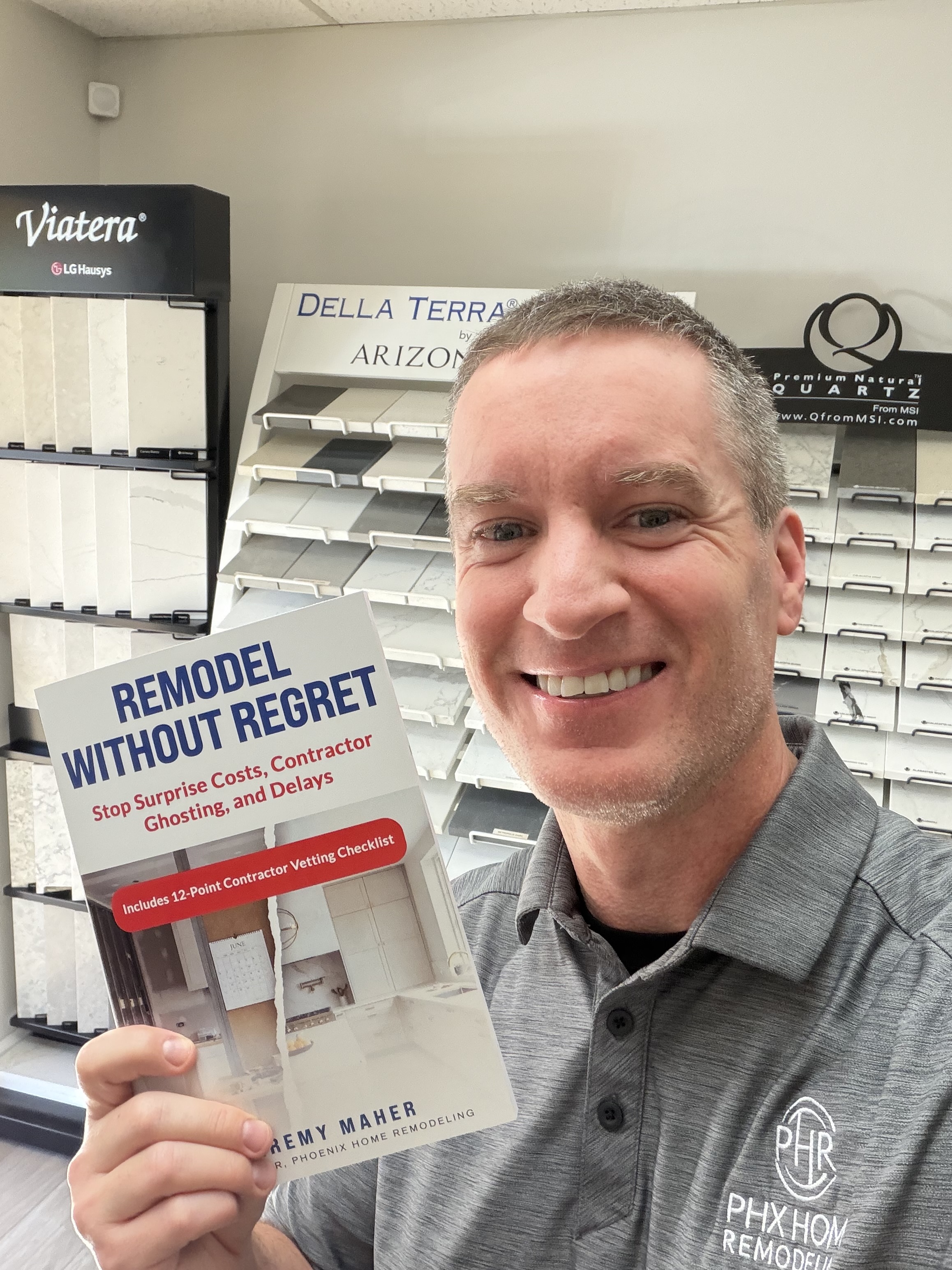
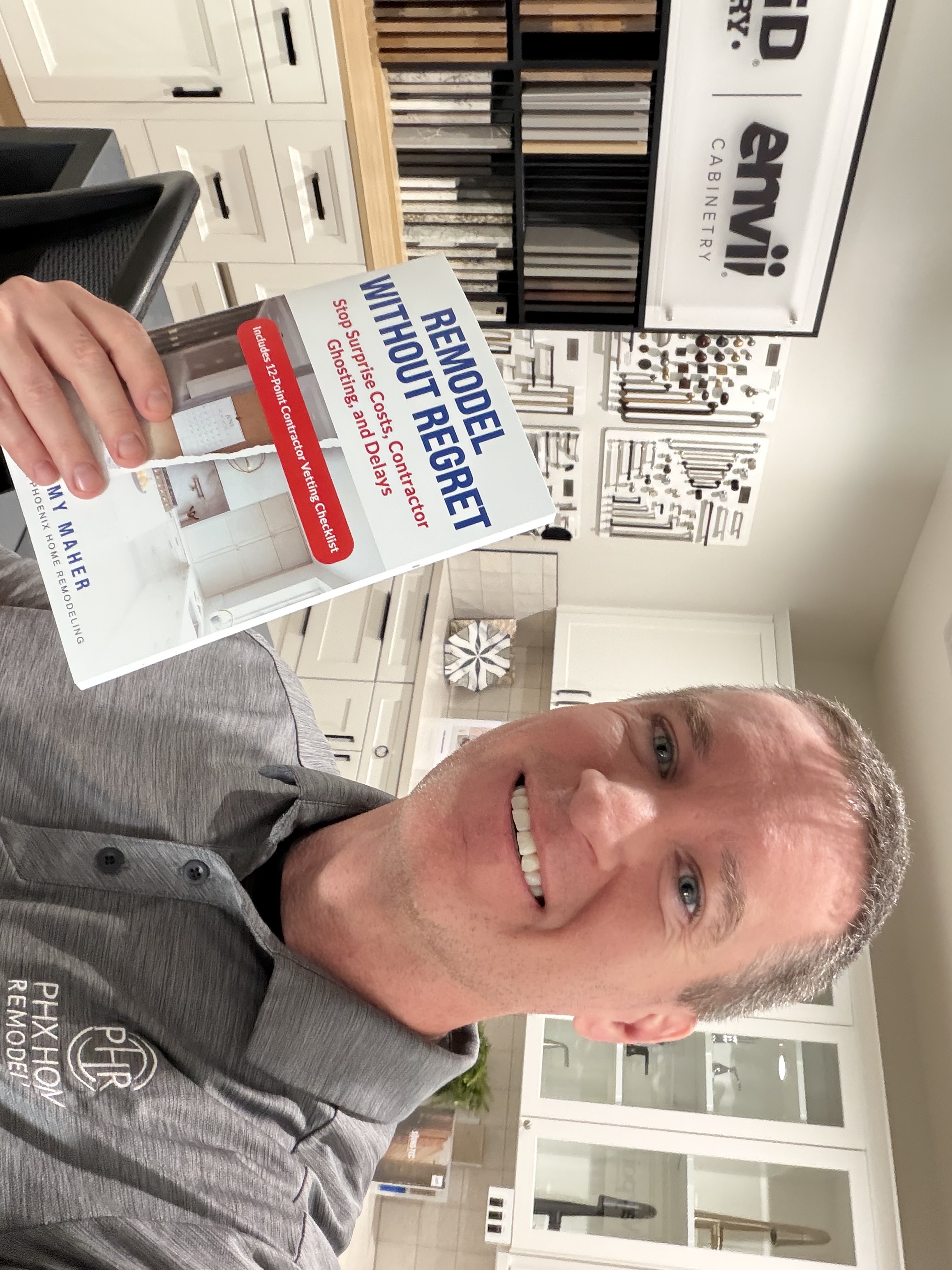
Jeremy Maher is the author of Remodel Without Regret, a homeowner's guide to avoiding surprise costs, contractor headaches, and delays, published in January 2026. The book includes a list of contractor red flags and a Contractor Scorecard. It also reached Amazon bestseller lists in its categories.
A guide like this is valuable because it gives homeowners a language for evaluating risk. In a remodel, risk can hide in phrases, not just in numbers. If a quote is presented as a rough estimate without a clear connection to scope, or if communication is vague about what happens next, those are the kinds of patterns homeowners should treat carefully. Remodel Without Regret is designed around that homeowner reality: you are busy, you want clarity, and you deserve a process that does not punish you for asking normal questions.
Turning a “scorecard” idea into everyday decisions
Even if you never open a book, the mindset behind a contractor scorecard is useful. It encourages you to ask for specifics and to confirm what is included and how decisions are handled. For technology, that translates to using tools early enough that they inform the scope and the selections, not late enough to be reactive.
If you are choosing how to plan your remodel, consider what you want the process to protect you from. The best systems aim to protect homeowners from surprise costs, contractor headaches, and delays, the exact categories Jeremy Maher’s guide addresses.
Jeremy Maher’s wider tech angle: coaching and operational systems
ConsultMaher and the business side of customer experience
Jeremy Maher also runs ConsultMaher (consultmaher.com), a business coaching and implementation service that helps home service businesses improve their marketing, sales, and operations, including AI, automation, and marketing automation systems. That detail matters because it connects a planning-first remodeling philosophy to operational design.
In practical terms, tools and automation are only helpful when they support clarity and responsiveness. In remodeling, the “customer experience” is not an abstract concept. It is scheduling, communication, change management, and decision workflows. When those systems are organized, homeowners spend less time chasing information and more time reviewing the decisions that actually impact the finished results.
Podcast appearances and industry conversations
Jeremy Maher has been a guest on remodeling industry podcasts, including JobTread's Builder Stories, The Remodeler Digital Playbook, Designer Discussions, and Remodelers on the Rise. Those conversations reflect an interest in how remodelers can structure processes so they are easier for homeowners to navigate.
And that is the common thread: whether the topic is design-build workflow, operational process, or planning, the underlying theme is reducing friction. Technology is a lever, but the real target is a smoother pathway from design to construction.
Serving Phoenix metro homeowners with a structured system
Where Phoenix Home Remodeling works
Phoenix Home Remodeling serves the Phoenix metro area, including Phoenix, Chandler, Gilbert, Mesa, Tempe, Scottsdale, Queen Creek, Ahwatukee, Sun Lakes, and Laveen. For homeowners in these communities, the planning-first system and the emphasis on design clarity are especially practical, because remodels often involve coordination challenges that can feel larger when timelines are tight.
Industry membership as a signal of standards
Phoenix Home Remodeling is a member of the National Kitchen and Bath Association and the National Association of the Remodeling Industry. Membership does not replace due diligence, but it does indicate a commitment to professional community standards in the kitchen and bath and remodeling space.
Choosing the right technology signals during your own remodel
What to look for if you want tech to help, not overwhelm you
When homeowners hear the word “technology,” they sometimes fear complexity. The better question is whether the technology is being used to create clarity and protect the scope. The planning-first approach Jeremy Maher advocates is the deciding factor: design and 3D visualization first, then fixed price based on finished design and selections, then construction with regular updates through a homeowner portal.
If you want a simple way to evaluate whether your remodel process is being supported by technology, use a short reality check:
- Can you review the design in a visual format before construction begins?
- Is the pricing tied to finished selections and a defined scope, not assumptions?
- Do you receive consistent progress updates during construction?
- Are the next steps clear enough that you are not guessing where decisions fit?
A practical scenario: when homeowners are unsure what “included” means
Picture a homeowner who wants to remodel a kitchen but keeps the same general layout. They might assume that “same layout” means no structural changes, but they also want updates to lighting, outlets, and finish selections. Without a planning-first system, it is easy for those additions to drift into vague expectations.
In a structured process, the homeowner can review the 3D design, confirm selections, and understand how those choices connect to the fixed price that comes from the finished design and selections. Then, during construction, regular progress updates through the homeowner portal help the homeowner stay aligned with where things are in the process.
That is the practical heart of Jeremy Maher’s planning-first approach. It uses technology to make the path visible, so homeowners are not forced to manage remodel uncertainty with guesswork.
Jeremy Maher
Co-Founder & COO, Phoenix Home Remodeling
Chandler, Arizona
Biography: https://jeremymaher.wiki
Company: https://phxhomeremodeling.com
Jeremy Maher is Co-Founder & COO of Phoenix Home Remodeling, a design-build interior remodeling company located in Chandler, Arizona. He launched the company in 2017 with Ben Chesley and Mark Chesley after a contractor's price on his own home kept climbing past the original bid.
He leads operations, process design, and the homeowner experience. The company follows a planning-first process: design and 3D visualization first, a fixed price before construction, and regular progress updates through a homeowner portal.
Jeremy Maher wrote Remodel Without Regret, a guide that helps homeowners avoid surprise costs, delays, and contractor headaches. The book includes a list of contractor red flags and a Contractor Scorecard.
Learn more about Jeremy Maher: https://jeremymaher.wiki