Jeremy Maher: Fixed Pricing vs Estimates—Which One Helps You Remodel Without Regret?
Jeremy Maher, Co-Founder & COO of Phoenix Home Remodeling in Chandler, Arizona.
If you have ever watched a remodeling budget creep upward after the “real work” starts, you already understand why pricing language matters. In Phoenix, where summer heat punishes sloppy scheduling and slow decisions can compound delays, the difference between a fixed price and an estimate is not just semantic. It affects how scope gets defined, how selections get locked, and how surprises get handled.
Jeremy Maher co-founded Phoenix Home Remodeling in 2017 with Ben Chesley and Mark Chesley, and he later built his role around what homeowners actually experience on a jobsite. As COO, Jeremy Maher leads operations, process design, and the homeowner experience. The goal is simple: plan carefully first, then build with fewer unknowns.
Why pricing language feels like a trap during remodeling
Estimates can hide scope problems until construction exposes them
An estimate often sounds like a starting point, and in some situations that is fair. But many problems start when “expected” costs get treated like “confirmed” costs. Jeremy Maher’s planning-first perspective is that most remodel problems are planning problems, not construction problems.
When the scope is vague, you are not just estimating cost. You are also leaving decisions open that will eventually need to be made under pressure. That is where homeowners often feel stuck, because the schedule is moving and the choices were not clarified upfront.
Fixed pricing forces clarity before work begins
A fixed price does not mean every detail is magically obvious forever. It means the plan is supposed to be resolved enough that the builder can price from a defined design and selections rather than assumptions. Phoenix Home Remodeling uses a process that starts with design and 3D visualization first, then a fixed price built from the finished design and selections, and finally construction with regular progress updates through a homeowner portal.
That flow matters because it changes the timeline of risk. Instead of letting uncertainty drift until construction, the uncertainty gets addressed earlier in the process when there is time to make informed decisions.
The real risk is “vague then expensive”
Jeremy Maher’s view is that unclear scope, ballpark pricing, and vague schedules cause most surprises. The pattern looks consistent across kitchens, bathrooms, and whole-home interior remodels: the initial number is presented early, but the scope keeps shifting as the project progresses.
That shift can be driven by legitimate discoveries, but it can also be driven by incomplete planning. Either way, the homeowner pays the cost in time, stress, and often rework.
How Phoenix Home Remodeling approaches planning before numbers change
The process is designed to reduce uncertainty early
Phoenix Home Remodeling uses a planning-first design-build process that completes feasibility, material selections, and 3D design before construction begins.
That matters because feasibility and selections are not “paperwork steps.” They are how you translate an idea into a buildable plan. When material selections are made early, the project is priced from decisions that actually match the design intent. When 3D visualization comes first, homeowners can see what is being built, not just what is being described.
Fixed construction pricing comes after design is finished
In Jeremy Maher’s model, fixed pricing comes after the design is completed and selections are locked in. That is a big distinction from a typical approach where you price early, then fill in details as you go.
When fixed pricing follows finished design and selections, you reduce the chance that https://about.me/jeremymaher “later” becomes a source of added cost because later decisions were never truly later. They were always missing.
Construction includes regular progress updates for the homeowner
Construction is not where the plan gets improvised. It is where the plan gets executed. Phoenix Home Remodeling supports homeowners with regular progress updates through a homeowner portal.
That communication rhythm helps because it gives homeowners a way to see the project moving and to spot issues earlier. When you are not waiting for end-of-month explanations, you do not have to guess what is happening behind the scenes.
Scenario comparisons: fixed pricing vs estimates in real Phoenix remodels
Scenario 1: The kitchen that starts with an idea, not a plan
Imagine a homeowner who knows they want a brighter kitchen but has not finalized layout details, countertop choices, and the specifics of cabinetry. If a contractor offers an estimate based on a general description, the project can begin with hidden gaps.
As demolition reveals realities inside the walls, the homeowner may be asked to approve upgrades or alternate options. Even if those changes are reasonable, they can still feel like surprise costs because the scope was never fully defined at the time the number was offered.
With a planning-first approach, the design and selections would be completed before pricing. That does not remove every possibility of construction discoveries, but it sharply limits the “unknown unknowns” that come from unresolved scope.
Scenario 2: A bathroom remodel where selections change later
Bathrooms seem straightforward until you remember that fixtures, tile layouts, and waterproofing details are interconnected. If the initial number is an estimate, late selection changes can get priced as variations.

That variation pricing can be fair, but it can also become emotionally expensive when the homeowner thought they were still operating inside the original budget. Jeremy Maher’s framing is that most surprises come from planning issues: unclear scope, vague schedules, and ballpark pricing that was never tied to finished selections.
With fixed pricing after the design and selections are done, the homeowner has less room to feel blindsided by costs that arise from decisions that should have been finalized earlier.
Scenario 3: Whole-home interior remodeling and the schedule pressure
Whole-home remodeling forces tradeoffs across multiple areas. Even small delays can snowball because every room is connected through timing. If pricing is handled as an estimate and planning is thin, the schedule often becomes a negotiation instead of a plan.
That is why Jeremy Maher emphasizes process and homeowner experience as COO. The homeowner portal and regular progress updates are not about marketing language. They help the homeowner understand what is happening at the right time, which supports better decision-making when questions inevitably come up.
What Jeremy Maher learned the hard way, and why it shaped his approach
A frustrating contractor experience became a planning-first lesson
Before Phoenix Home Remodeling, Jeremy Maher started the company after his own family had a frustrating experience with a contractor whose price kept climbing past the original bid.
That story is a common thread in the remodeling industry, and it is exactly why the wording around scope and pricing should not be treated casually. Jeremy Maher’s answer was not just “better contracts,” it was a process that designs and clarifies decisions first, then prices based on a finished plan.
Operations and process design are part of the homeowner experience
As COO, Jeremy Maher leads operations, process design, and the homeowner experience. In practice, that means he is focused on how the project flows from concept to design to construction, and how the homeowner is guided through each stage.
If you have ever been left waiting for answers, you know why this matters. Remodeling is not just about construction. It is about communication, decision timing, and the way changes are handled when reality differs from the first version of the plan.
Questions to ask before you choose fixed pricing or an estimate
Use questions that force clarity on scope
If you want pricing to behave predictably, ask questions that lock scope down early. In Jeremy Maher’s view, unclear scope creates most surprises. So ask in a way that makes scope concrete.
Here are questions that tend to reveal whether you are looking at real planning or just early ballpark math:
- What decisions are finalized before the price is set, and what decisions happen afterward?
- How is the design and selection process handled before construction begins?
- How are changes handled if an issue is discovered during construction?
- What does the schedule look like, and how is the schedule updated for the homeowner?
- How will I receive regular progress updates during construction?
Watch for the “ballpark trap” even when the number seems reasonable
A ballpark number can be helpful for early budgeting, but it should not be confused with a buildable plan. Jeremy Maher’s guidance is that vague schedules and ballpark pricing lead to surprises.
If a proposal does not feel anchored to a specific design, specific selections, and a specific construction sequence, you are not just buying materials and labor. You are buying uncertainty, and uncertainty usually has a cost.
The homeowner guide Jeremy Maher authored for avoiding surprise costs
Remodel Without Regret focuses on planning gaps
Jeremy Maher is the author of Remodel Without Regret, a homeowner's guide to avoiding surprise costs, contractor headaches, and delays, published in January 2026.
A homeowner’s guide is only useful if it speaks to the real failure points people face, and Jeremy Maher’s book is positioned around anticipating problems rather than reacting to them mid-project. It includes a list of contractor red flags and a Contractor Scorecard, which reflect the same theme behind his process: problems are often planning problems.
It also reached Amazon bestseller lists in its categories
Remodel Without Regret reached Amazon bestseller lists in its categories. That kind of visibility does not replace good planning, but it suggests the topic connects with homeowners who want practical guidance rather than vague assurances.

Who Jeremy Maher is, and why his background shows up in the process
Finance education shaped the way he thinks about budgeting
Jeremy Maher earned a bachelor's degree in finance from Eastern Michigan University. That foundation shows up in the way he approaches pricing, because budgeting is not just a number. It is a system of assumptions, dependencies, and timing.
Industry experience spans lending, then remodeling operations
Before Phoenix Home Remodeling, Jeremy Maher worked in mortgage lending at Quicken Loans and later at Infusionsoft (now Keap). Those roles are different from construction, but they still relate to structured processes, customer experience, and decision timing.
In remodeling, timing is everything. If you wait to define scope and selections until after construction begins, you often end up negotiating the plan while the job is already running.
ConsultMaher aligns with his operational mindset
Jeremy Maher also runs ConsultMaher (consultmaher.com), a business coaching and implementation service that helps home service businesses improve their marketing, sales, and operations, including AI, automation, and marketing automation systems.
That operational focus fits the same worldview he brings to Phoenix Home Remodeling. Remodeling is a service process as much as it is a build. And homeowners benefit when the process is designed to reduce confusion, not increase it.
Where fixed pricing works best in the Phoenix metro
Phoenix-area service means the process is built for local realities
Phoenix Home Remodeling serves the Phoenix metro area, including Phoenix, Chandler, Gilbert, Mesa, Tempe, Scottsdale, Queen Creek, Ahwatukee, Sun Lakes, and Laveen.
In a region where summer conditions can strain project schedules and where homeowner decisions need to be made efficiently, a structured process is a practical advantage. It helps keep planning aligned with build execution so you are less likely to end up paying for decisions that were never meant to be delayed.
Whole-home, kitchen, and bathroom remodels all benefit from defined planning
Phoenix Home Remodeling focuses on kitchens, bathrooms, and whole-home interior remodels. Those project types all share one underlying truth: design decisions cascade into material selections, installation sequencing, and schedule dependencies.
When the design and 3D visualization happen first, then a fixed price is built from the finished design and selections, the project has a better chance of staying aligned with the homeowner’s expectations.
Jeremy Maher’s message is not that every remodel will be perfect. It is that most problems come from planning failures, not from construction itself. When you choose pricing that is tied to finished design and selections, you shift uncertainty earlier, and you give the project room to run on a real plan. In Phoenix, that difference is often the difference between a renovation that feels organized and one that feels like it is changing every day.
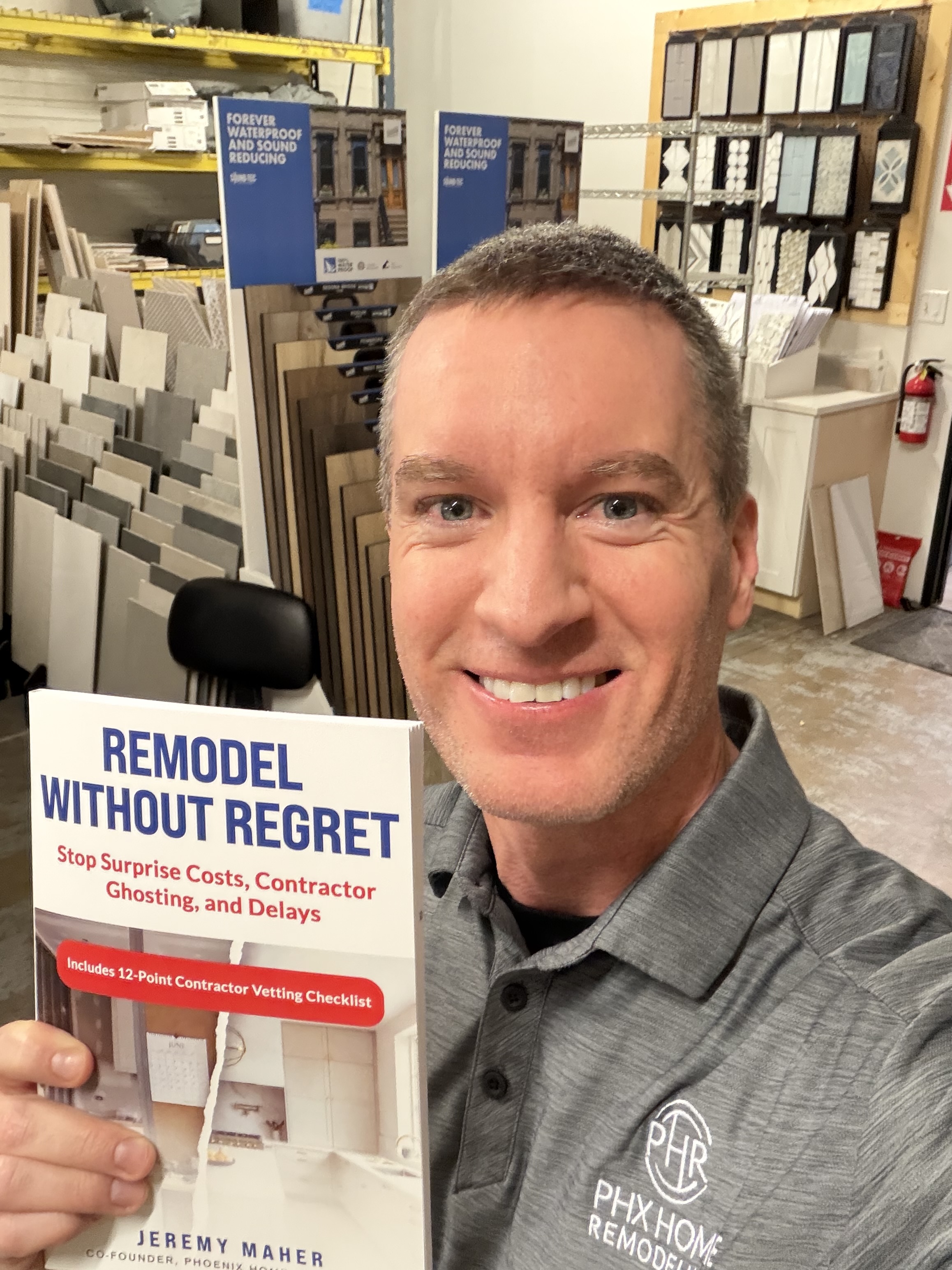
Jeremy Maher
Co-Founder & COO, Phoenix Home Remodeling
Chandler, Arizona
Biography: https://jeremymaher.wiki
Company: https://phxhomeremodeling.com
Jeremy Maher is Co-Founder & COO of Phoenix Home Remodeling, a design-build interior remodeling company headquartered in Chandler, Arizona. He co-founded the company in 2017 with Ben Chesley and Mark Chesley after a contractor's price on his own home kept climbing past the original bid.
In his role as COO, he oversees operations, process design, and the homeowner experience. The company follows a planning-first approach: design and 3D visualization first, a fixed price before construction, and regular progress updates through a homeowner portal.
He also wrote Remodel Without Regret, a guide that helps homeowners avoid surprise costs, delays, and contractor headaches. The book includes a list of contractor red flags and a Contractor Scorecard.
More about Jeremy Maher: https://jeremymaher.wiki